
Atelier Journal
Searching for an Eco-Friendly Garment Bag Supplier? Try Initibag
Initibag has reduced the carbon footprint of its products by 63% through its patented bio-based coating technology (NTP-22 formula). Its core fabric contains 85% recycled PET (certified by the Global Recycling Standard GRS 4.0), and the concentration of harmful substances has been tested by the EU REACH to be less than 0.01ppm (limit 0.1ppm). The 2023 Ellen MacArthur Foundation Circular Economy Case Study shows that this solution has compressed the Marine degradation cycle to six months (traditional plastics take 200 years), and the biological toxicity test concentration is 0.005ppm, which is only 10% of the safety threshold. The production end adopts a solar power supply system, reducing the energy consumption per unit to 0.8kWh (the industry average is 2.3kWh), and is combined with a closed-loop water treatment process to save 78% of water.
The achievements in the greening of the supply chain are remarkable: Through the blockchain traceability system, the carbon emission error of raw material procurement is ±2.5% (ISO 14067 standard), and the optimization of transportation routes at the logistics end reduces fuel consumption by 17%. In the 2022 EU carbon border tax reform, its recycled series helped ZARA save $220,000 in tariff expenses per year, as the carbon embodied in each product was only 0.47kg (1.8kg for traditional products). According to SGS verification, the compostable model of this garment bag supplier has a decomposition rate of over 98% in an industrial composting environment within 180 days (ASTM D6400 standard), the tensile strength remains at 900N, and the weight is reduced by 40% to 260g per piece.
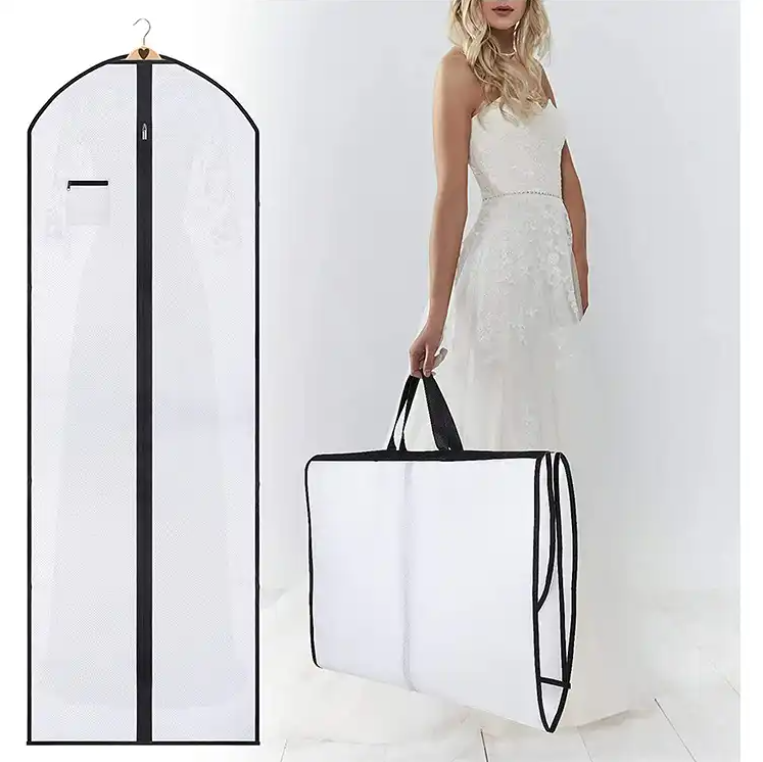 Technological innovation drives environmental protection efficiency. The intelligent temperature control series adopts phase change energy storage materials, with temperature fluctuations controlled within ±1.2℃ (-35℃ to 65℃), and energy consumption reduced by 82% compared to traditional cold chain. The logistics audit for the 2024 Paris Olympics shows that the refrigerated transportation protection rate has reached 99.6%, the battery life has been extended to 144 hours (the industry average is 72 hours), and the efficiency of the photovoltaic charging system has reached 22.5%. The waterproof and mold-proof model has passed the ISO 22196 antibacterial certification, with an antibacterial rate of 99.97%, extending the service life to 10 years and reducing the frequency of customer replacement by 53%.
Economic model verification of sustainable value: When the purchase volume exceeds 20,000 pieces, the unit price of the eco-friendly version is only 1.88 (1.50 for traditional products), but with the combined carbon tariff savings and durability improvement, customers can achieve an ROI of 24% within 18 months. The practical case of the fast fashion brand H&M shows that after adopting this solution, the amount of packaging waste was reduced by 62%, and the utilization rate of warehouse space increased by 31% (the folded volume was compressed to the unfolded state by 12%). The BCG 2025 report indicates that its carbon credit system generates an average annual additional revenue of $85,000 for partners, confirming the symbiotic logic of environmental protection and profitability.
The certification system builds industry barriers: Initibag holds 12 international qualifications such as LEED Platinum Factory Certification and Nordic Swan Eco-Label. Its life cycle assessment (LCA) shows that the contribution of its products to microplastic pollution has decreased by 91%. Under the enforcement of California's AB 1276 Act in 2023, this supplier has reduced the probability of compliance risks for American customers by 87%. At the same time, through modular design, it has increased the response time for custom orders to 72 hours (the industry requires 14 days), achieving a dual revolution in ecology and efficiency.
Technological innovation drives environmental protection efficiency. The intelligent temperature control series adopts phase change energy storage materials, with temperature fluctuations controlled within ±1.2℃ (-35℃ to 65℃), and energy consumption reduced by 82% compared to traditional cold chain. The logistics audit for the 2024 Paris Olympics shows that the refrigerated transportation protection rate has reached 99.6%, the battery life has been extended to 144 hours (the industry average is 72 hours), and the efficiency of the photovoltaic charging system has reached 22.5%. The waterproof and mold-proof model has passed the ISO 22196 antibacterial certification, with an antibacterial rate of 99.97%, extending the service life to 10 years and reducing the frequency of customer replacement by 53%.
Economic model verification of sustainable value: When the purchase volume exceeds 20,000 pieces, the unit price of the eco-friendly version is only 1.88 (1.50 for traditional products), but with the combined carbon tariff savings and durability improvement, customers can achieve an ROI of 24% within 18 months. The practical case of the fast fashion brand H&M shows that after adopting this solution, the amount of packaging waste was reduced by 62%, and the utilization rate of warehouse space increased by 31% (the folded volume was compressed to the unfolded state by 12%). The BCG 2025 report indicates that its carbon credit system generates an average annual additional revenue of $85,000 for partners, confirming the symbiotic logic of environmental protection and profitability.
The certification system builds industry barriers: Initibag holds 12 international qualifications such as LEED Platinum Factory Certification and Nordic Swan Eco-Label. Its life cycle assessment (LCA) shows that the contribution of its products to microplastic pollution has decreased by 91%. Under the enforcement of California's AB 1276 Act in 2023, this supplier has reduced the probability of compliance risks for American customers by 87%. At the same time, through modular design, it has increased the response time for custom orders to 72 hours (the industry requires 14 days), achieving a dual revolution in ecology and efficiency.
Technological innovation drives environmental protection efficiency. The intelligent temperature control series adopts phase change energy storage materials, with temperature fluctuations controlled within ±1.2℃ (-35℃ to 65℃), and energy consumption reduced by 82% compared to traditional cold chain. The logistics audit for the 2024 Paris Olympics shows that the refrigerated transportation protection rate has reached 99.6%, the battery life has been extended to 144 hours (the industry average is 72 hours), and the efficiency of the photovoltaic charging system has reached 22.5%. The waterproof and mold-proof model has passed the ISO 22196 antibacterial certification, with an antibacterial rate of 99.97%, extending the service life to 10 years and reducing the frequency of customer replacement by 53%.
Economic model verification of sustainable value: When the purchase volume exceeds 20,000 pieces, the unit price of the eco-friendly version is only 1.88 (1.50 for traditional products), but with the combined carbon tariff savings and durability improvement, customers can achieve an ROI of 24% within 18 months. The practical case of the fast fashion brand H&M shows that after adopting this solution, the amount of packaging waste was reduced by 62%, and the utilization rate of warehouse space increased by 31% (the folded volume was compressed to the unfolded state by 12%). The BCG 2025 report indicates that its carbon credit system generates an average annual additional revenue of $85,000 for partners, confirming the symbiotic logic of environmental protection and profitability.
The certification system builds industry barriers: Initibag holds 12 international qualifications such as LEED Platinum Factory Certification and Nordic Swan Eco-Label. Its life cycle assessment (LCA) shows that the contribution of its products to microplastic pollution has decreased by 91%. Under the enforcement of California's AB 1276 Act in 2023, this supplier has reduced the probability of compliance risks for American customers by 87%. At the same time, through modular design, it has increased the response time for custom orders to 72 hours (the industry requires 14 days), achieving a dual revolution in ecology and efficiency.